The 10 Best Yuka Morii Cards in the Pokémon TCG
September 25, 2026
Most Pokémon TCG illustrators draw or paint. Yuka Morii sculpts. She builds every Pokémon by hand out of polymer clay, constructs a tiny diorama around it out of real materials like pebbles, leaves, and water, and photographs the finished scene. The card art you're looking at isn't a painting of a Pokémon. It's a photograph of a model.
She's been doing this since 2000, starting with Crossing the Ruins, and has racked up over 200 illustrations across nearly every set printed since. Almost none of her cards are secret rares or chase pulls. She mostly draws commons and uncommons, the cards nobody expects to look special, and turns them into the ones collectors specifically seek out. That's the whole appeal: her name on the bottom corner of a $2 common is often reason enough to want a copy.
Here are her 10 best cards, ranked, with her breakout piece saved for last.
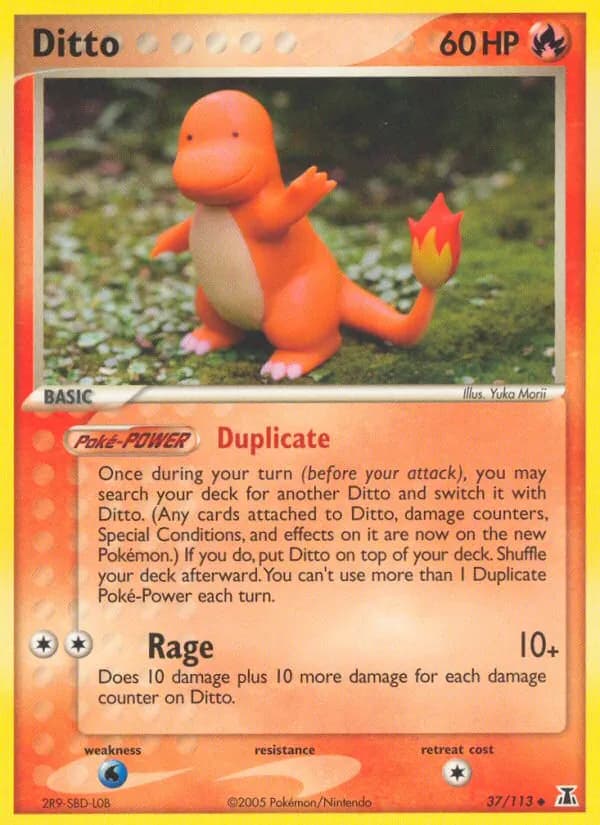
Fire-type Ditto illustrated by Yuka Morii from Delta Species
10. The Delta Species Ditto Six-Pack
Delta Species gave every Ditto an unnatural elemental typing, Fire, Water, Grass, Lightning, Psychic, and Colorless, and Morii illustrated all six. Rather than reuse one diorama, she built a distinct clay scene for each element: the Fire version sits in a scorched, glowing setup that looks like it was shot next to an actual heat source. Very few illustrators get asked to interpret the same Pokémon six different ways in a single set. Morii used the assignment to show her range.
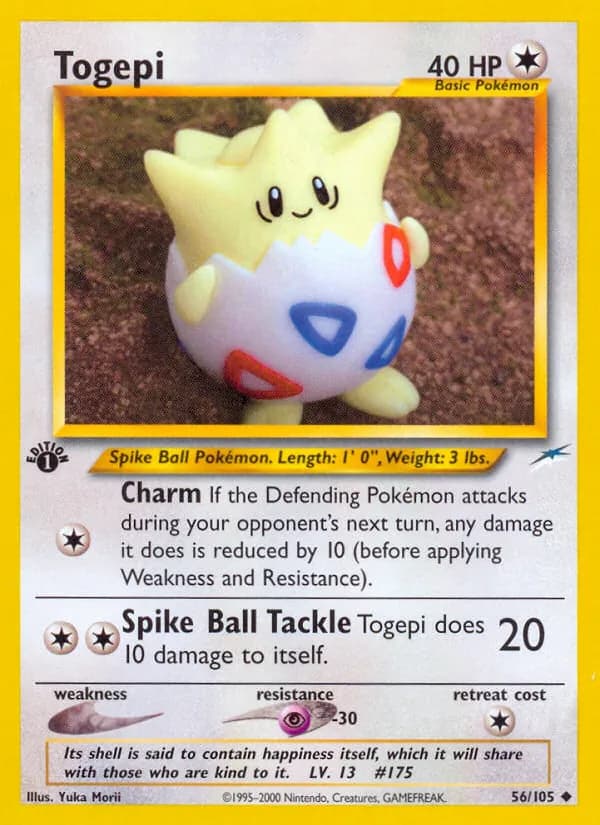
Togepi illustrated by Yuka Morii from Neo Destiny
9. Togepi (Neo Destiny)
Neo Destiny closed out the original Neo block in 2000, and Togepi was one of Morii's earliest assignments. The egg-shaped body is rendered in a soft, almost ceramic finish that reads more like a collectible figurine than a trading card illustration. It's a simple diorama by her later standards, but it's the clearest early proof of the tactile, physical quality that would define her work for the next two decades.
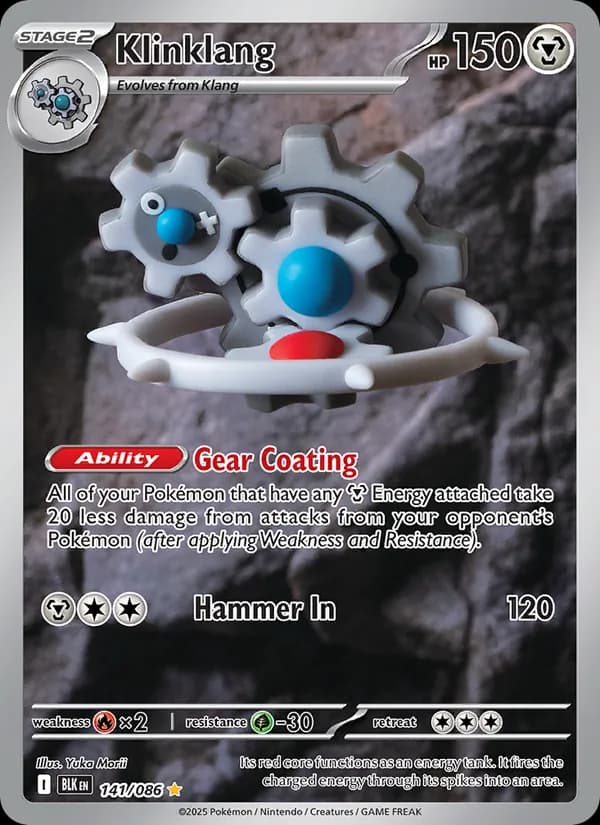
Klinklang illustration rare by Yuka Morii from Black Bolt
8. Klinklang (Black Bolt)
Black Bolt came out in 2025, a full 25 years after Morii's first TCG card. Klinklang is one of her few Illustration Rares, and it proves her style hasn't gone stale. The interlocking gears are sculpted with visible seams and metallic sheen that photograph better than a flat painting ever could, and the scale-up to full-art treatment gives her clay work room to breathe that a common-sized frame never allows.
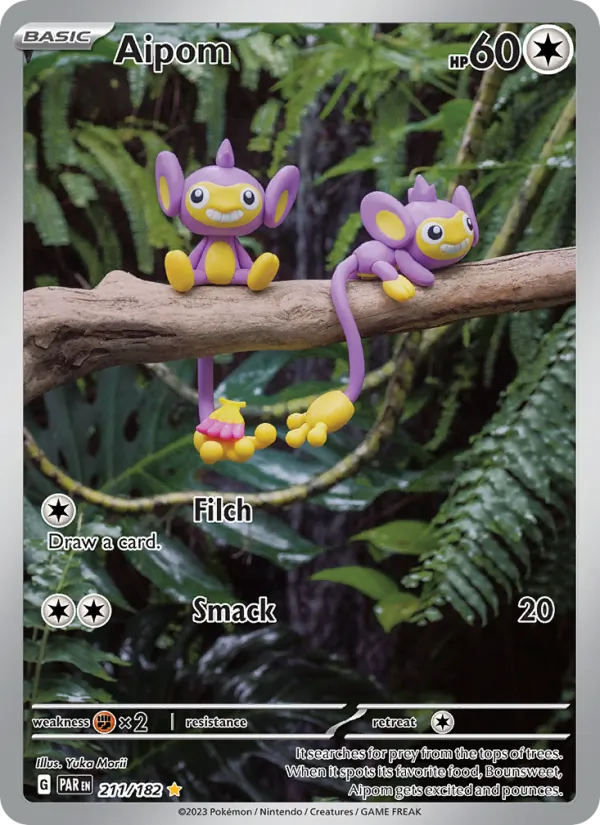
Aipom illustration rare by Yuka Morii from Paradox Rift
7. Aipom (Paradox Rift)
Paradox Rift's Aipom is a 2023 Illustration Rare that regularly shows up in "best modern secondary art" discussions, and it's easy to see why. Aipom's tail is looped around a branch in a diorama that leans hard into shallow depth of field, blurring the background just enough to make the sculpted foreground pop. It's one of the better arguments that a non-chase Pokémon can still carry a set's most talked-about card.
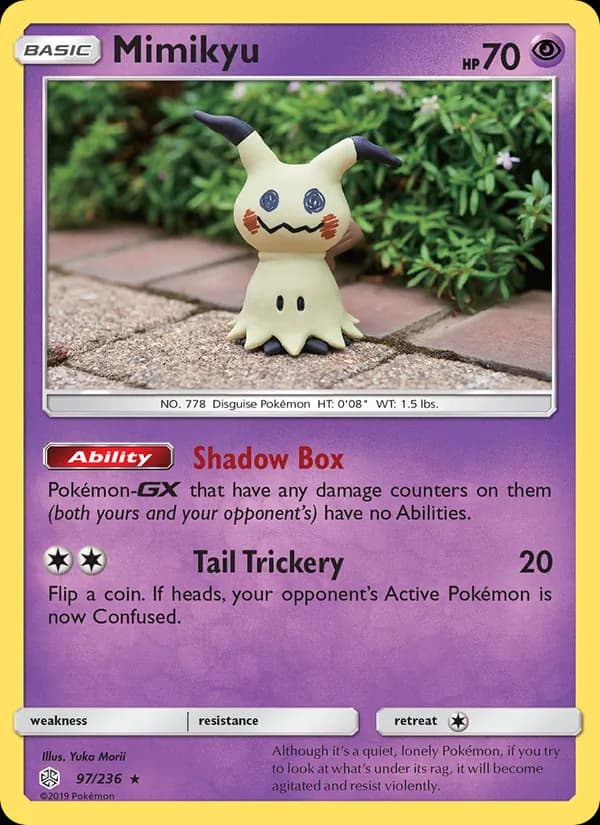
Mimikyu illustrated by Yuka Morii from Cosmic Eclipse
6. Mimikyu (Cosmic Eclipse)
Mimikyu is built around concealment, a disguise made of cloth hiding whatever is actually underneath, which makes it an obvious fit for an artist who works in physical materials. Morii's 2019 Cosmic Eclipse illustration renders the frayed cloth disguise with visible texture and stitching that a flat illustration would have to fake. It's one of the few times her medium matches the Pokémon's concept this directly.
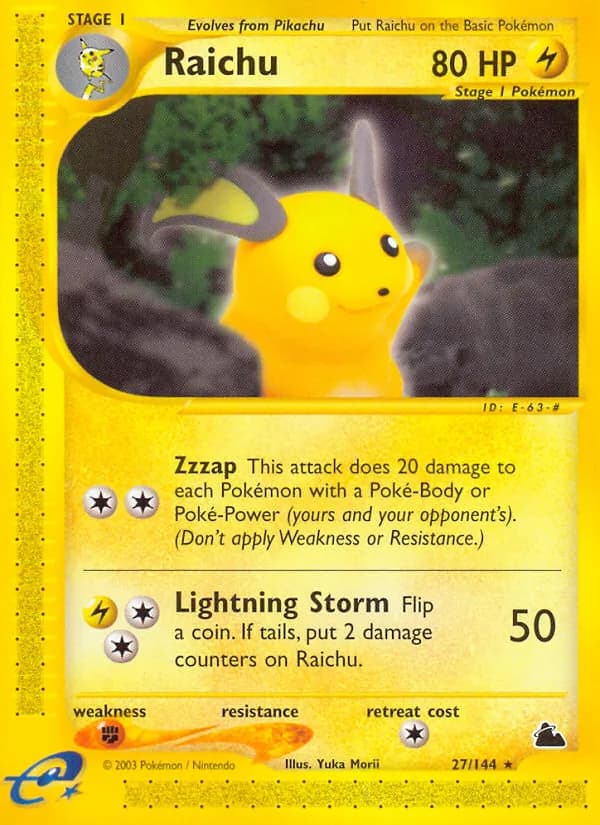
Raichu illustrated by Yuka Morii from Skyridge
5. Raichu (Skyridge)
Skyridge had one of the smallest print runs in TCG history, and prices on the set have stayed high for two decades because of it. Morii's Raichu is only a Rare, not a holo chase card, but Skyridge scarcity means even its lower-rarity cards carry real weight on the secondary market. The diorama itself, Raichu mid-shock against a moody, faintly electric backdrop, holds up as well as anything else in the set.
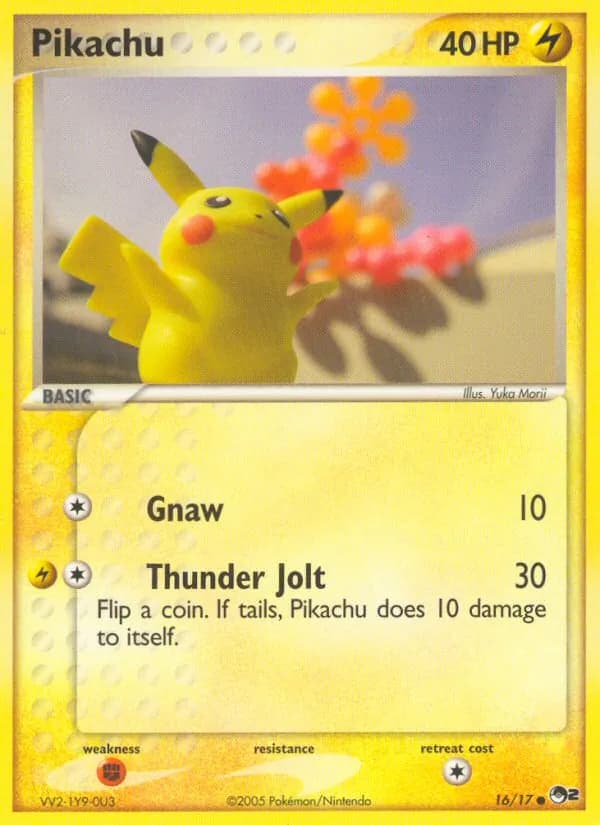
Pikachu illustrated by Yuka Morii from POP Series 2
4. Pikachu (POP Series 2)
POP Series promos were only distributed through League play, which makes this 2005 Pikachu harder to find today than its Common rarity suggests. If you've read our piece on the POP Series 5 Mew back error, you already know POP cards punch above their weight with collectors. Morii's Pikachu here is a quieter diorama than most of her work, just Pikachu perched on a rock, but the restraint is part of what makes it age well.
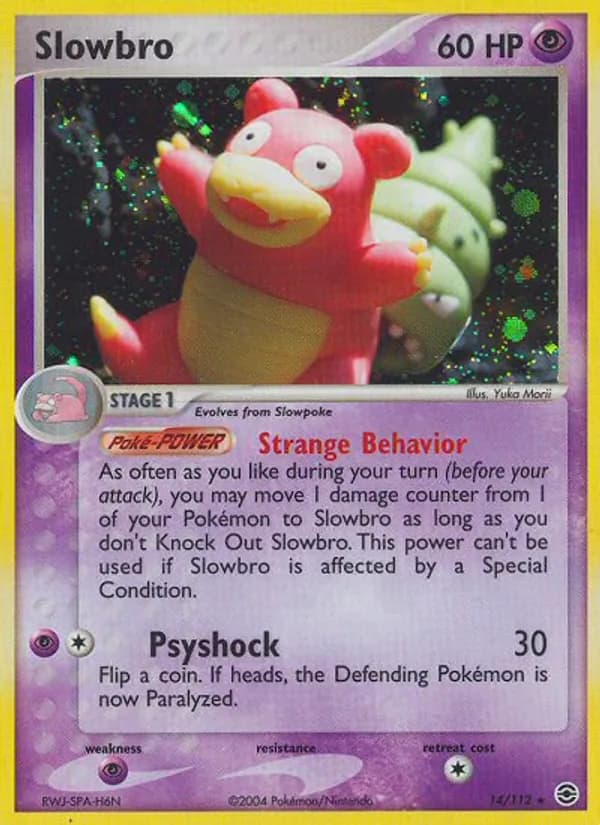
Slowbro illustrated by Yuka Morii from FireRed & LeafGreen
3. Slowbro (FireRed & LeafGreen)
This 2004 Slowbro is one of the better examples of what her clay work does that digital painting can't fake: real light hitting a real surface. The shell's texture catches highlights unevenly, the way an actual object would, and the low-saturation palette gives the whole card a warmth that most 2004-era Pokémon art doesn't have. It's a Rare that regularly gets called out by collectors specifically because of the artist, not the pull rate.
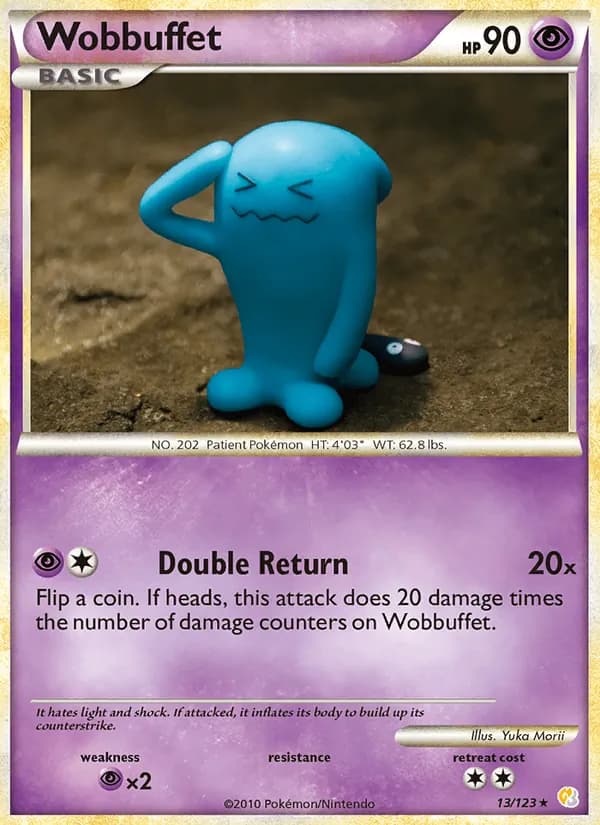
Wobbuffet illustrated by Yuka Morii from HeartGold SoulSilver
2. Wobbuffet (HeartGold SoulSilver)
This is the card most often credited with introducing Morii's style to Western collectors, and it's easy to see why it stuck. Wobbuffet's blank, slightly unsettling expression translates perfectly into a physical sculpt, and the 2010 HeartGold SoulSilver illustration leans into the deadpan comedy of the Pokémon rather than trying to make it look powerful. It's become something of a meme within collecting circles, referenced constantly whenever her name comes up.
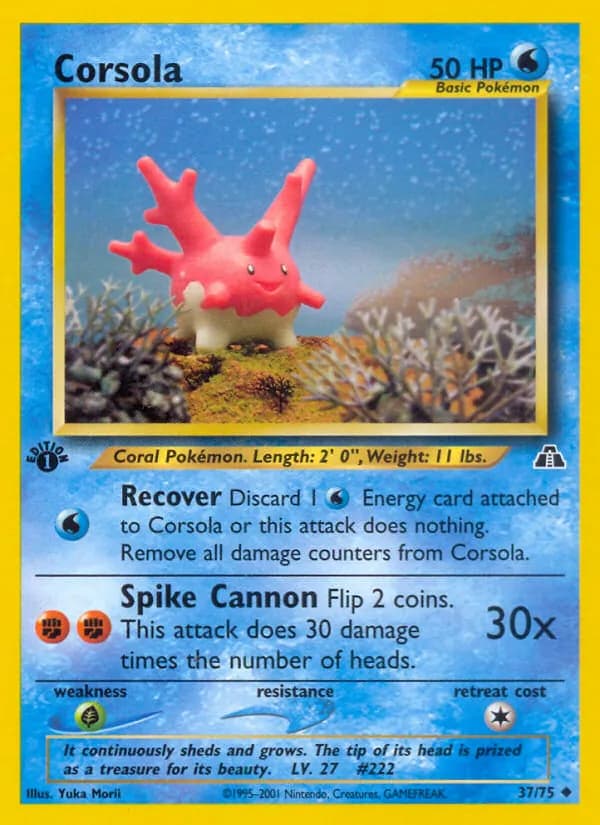
Corsola illustrated by Yuka Morii from Neo Discovery
1. Corsola (Neo Discovery)
Corsola is Morii's breakout piece, and a quarter century later it's still the card most cited as her best. The 2000 Neo Discovery illustration sets a sculpted Corsola against a fully built underwater scene, complete with a coral bed and a soft blue wash of light that makes the whole thing look like a photograph taken through an aquarium wall. It's an Uncommon that nobody treats like one. If you want a single card that explains why a clay-and-camera illustrator became one of the TCG's most collected artists, this is it.
What ties all 10 of these together is that none of them needed to be special. A Common, an Uncommon, a handful of Rares, and two modern Illustration Rares, spread across 25 years and a dozen different sets. Morii's dioramas are proof that the artist matters as much as the rarity when it comes to what collectors actually chase. If you're hunting down originals of any of these, older cards like the Corsola or Skyridge Raichu are worth grading if they arrive in sharp condition, since population reports on 25-year-old cards in gem mint shape are thin. Our rundown of the coolest cards in Perfect Order is a good next read if you're more interested in modern secret rare art than vintage clay dioramas.